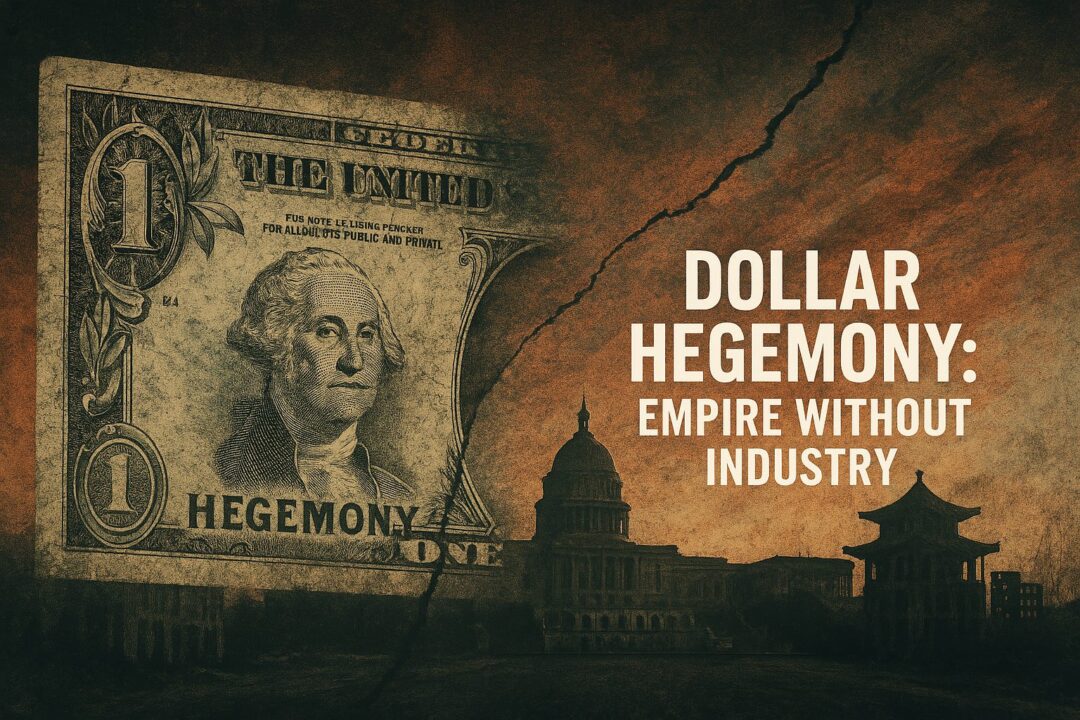
The global economy is drowning in money—but starved of growth. Central banks have created trillions, governments run record deficits, and financial markets have swelled to historic highs. Yet prosperity feels further out of reach. Wages stagnate, small businesses struggle for credit, productivity weakens, and wealth inequality has never been greater. Young people in many countries see housing, stability, and opportunity slipping away.
The problem is not the absence of money. It is that money has been flowing to the wrong places. For most of the 20th century, money creation was a force for progress. Thousands of small banks lent to farms, factories, and startups. Each loan created new money tied directly to productive activity—goods, services, and jobs. Prosperity was grounded in production.
Today that cycle has broken down. Money creation has been centralized into megabanks and central banks. Instead of fueling real growth, it flows into sovereign debt, mortgages, financial markets, and speculative assets. The result is soaring inequality, bloated governments, and a mountain of global debt that grows faster than economies can repay it. Money has been unmoored from production, and so it loses its meaning.
If the world is to escape stagnation, two countries must lead the way: the United States, issuer of the global reserve currency, and China, the world’s largest exporter. Their policies shape not only their own futures but also global credit and trade flows. But growth will only return if they confront the core problems: excessive regulation, government waste, misdirected money creation, and rising inequality.
1. Rebuild Decentralized Banking for Productive Credit
Growth begins with credit flowing into the hands of those who build real value. When a factory upgrades machines, a startup develops new software, or a farmer invests in equipment, those loans create both money and output. This is how prosperity is born. But this requires a dense ecosystem of small and medium-sized banks that actually know their communities.
Over recent decades, these banks have been decimated. In the U.S., community banks have been swallowed by giants. In China, rural credit cooperatives have been sidelined by state megabanks. Excessive one-size-fits-all regulation has added crushing compliance costs that only the largest players can bear. The result is fewer relationship lenders, less productive credit, and more dependence on central authorities.
- United States: Fast-track charters for new community banks. Scale regulation to bank size so that small lenders are not suffocated by compliance costs designed for megabanks. Create Fed facilities that channel liquidity through small banks when they make verifiable SME loans tied to payroll and investment.
- China: Strengthen local banks and cooperatives through proportional regulation, national SME loan guarantees, and transparent credit registries. Impose credit quotas so that state-owned enterprises cannot crowd out private entrepreneurs.
If tens of thousands of small banks are restored, money creation can once again be tied to the act of producing real goods and services.
2. Scale Back Regulation, Waste, and Unproductive Spending
Excessive rules and bureaucracy do not build prosperity—they smother it. In both America and China, the regulatory state has grown sprawling and unaccountable, creating barriers for SMEs while advantaging megabanks and politically connected firms. At the same time, governments have poured money into wasteful programs and unproductive projects—often infrastructure that enriches private contractors at inflated costs without delivering value to society.
- Cut red tape: Streamline permitting and licensing so that businesses can invest without years of delay. Reduce compliance burdens for small firms and local banks while keeping core safety standards intact.
- Stop subsidizing unproductive projects: End government schemes that pour money into overpriced, politically driven private infrastructure that generates fees but not growth.
- Audit government waste: Scale back bureaucracies and consumption-heavy spending that adds debt without improving welfare or productivity. Reallocate to areas with measurable impact.
Growth will not come from ever-bigger governments propping up inefficient systems. It will come from clearing the obstacles that prevent productive enterprise from thriving.
3. Make the Eurodollar System Safe and Useful Again
The world runs on offshore dollars. The eurodollar system—dollar deposits and loans created outside the U.S.—once powered trade and investment across the globe. But since the financial crisis, dollar liquidity offshore has become fragile, squeezed by regulation and risk aversion. The result is periodic shortages that choke exporters, raise borrowing costs, and spark financial turmoil far from Washington or Beijing.
- United States: Make the Fed’s swap lines and repo facilities permanent and rule-based. Adjust capital rules so that banks can provide trade finance and cross-border credit without punitive balance-sheet costs. Expand Ex-Im guarantees to ensure that dollar liquidity actually reaches SMEs and exporters, not just Wall Street.
- China: Provide predictable USD funding windows for exporters and banks that prove their exposure is tied to trade. Crack down on local government financing vehicles and property developers that siphon dollar liquidity into speculation.
A stable, elastic eurodollar system is essential for world growth. Without it, trade suffocates, and global recovery is impossible.
4. Tilt Credit Back Toward Production
Both America and China have allowed the majority of credit to be consumed by housing speculation, government deficits, and financial markets. This must change. Money must once again fund the creation of real capacity, not just paper assets.
- Raise capital requirements for speculative lending (investor real estate, securities leverage), and lower them for verifiable business investment.
- Use targeted guarantees and co-investment for infrastructure, technology, and energy projects—but only with transparency, clear returns, and sunset clauses.
- Publish dashboards showing exactly how much new credit supports SMEs, factories, and innovation versus financial engineering and asset churn.
Unless credit is tilted back to production, money creation will continue to inflate overpriced assets while leaving the real economy stagnant.
5. Confront Inequality
No growth model is sustainable if it funnels wealth upward while leaving the majority behind. Today, inequality is both an economic drag and a political fault line. Asset owners benefit from cheap credit and financial bubbles, while workers and young people face rising costs and shrinking opportunity. This imbalance weakens demand, undermines trust, and breeds instability.
- Wages and participation: Expand access to skills training, mobility, and childcare to bring more people into productive work with rising real incomes.
- Wealth distribution: Tilt tax systems away from rewarding financial engineering and toward supporting innovation, enterprise, and earned income.
- Housing affordability: Unlock supply through zoning reform and targeted credit, bringing down shelter inflation that locks younger generations out of stability.
Inequality is not just unfair—it is unproductive. Broad-based prosperity is the foundation of sustainable demand and political stability.
6. Remove Structural Barriers to Growth
Money and credit alone are not enough. If businesses are trapped in red tape and uncertainty, they will not invest no matter how low interest rates are. Both America and China need to tear down the bottlenecks that suffocate enterprise.
- United States: Slash permitting times for energy, housing, and infrastructure. Reform zoning to allow more supply and bring down housing costs. Expand open banking and digital payment rails to reduce SME financing costs.
- China: Push hukou reform to allow families to move and work freely across cities. Strengthen property rights in rural areas. End arbitrary crackdowns on private firms and commit to stable, transparent regulatory frameworks.
Clearing these barriers is as important as redirecting credit itself. Growth requires not just money but freedom to invest productively.
Conclusion: Redirect Money Creation to Real Growth
The world does not suffer from a shortage of money. It suffers from a shortage of money directed toward productive use. Central banks and megabanks create credit, but it flows into sovereign debt, asset bubbles, and financial engineering. Governments spend, but too often on waste and overpriced projects that enrich insiders without improving productivity. Excessive regulation crushes small banks and SMEs while allowing inequality to grow unchecked.
America and China must lead in reversing this. They must rebuild decentralized banking, restore the eurodollar system, scale back regulation and waste, stop subsidizing unproductive private infrastructure, tilt credit back to production, and confront inequality head-on. They must measure success not by the size of their financial markets or government budgets, but by productivity, wages, innovation, and opportunity.
The choice is clear. Either money continues to inflate debts and overpriced assets while growth stagnates, or money creation is reconnected to the real economy and prosperity is restored. America and China have the scale and responsibility to choose the latter—and if they do, the world economy can grow again in ways that are broad, durable, and real.
Discover more from Brin Wilson...
Subscribe to get the latest posts sent to your email.