For most of modern history, money was created in ways that built economies. When a bank lent to a factory upgrading its machines, a startup investing in new technology, a farmer buying equipment, or a shipping company expanding its fleet, that loan didn’t just transfer existing savings. It created new money—money tied directly to the promise of production, jobs, and innovation.
This system was decentralized and grounded. Thousands of commercial banks across the world created money by financing businesses, industries, and communities. The money supply grew in step with real economic activity, and its meaning was clear: money represented the ability to produce and exchange value.
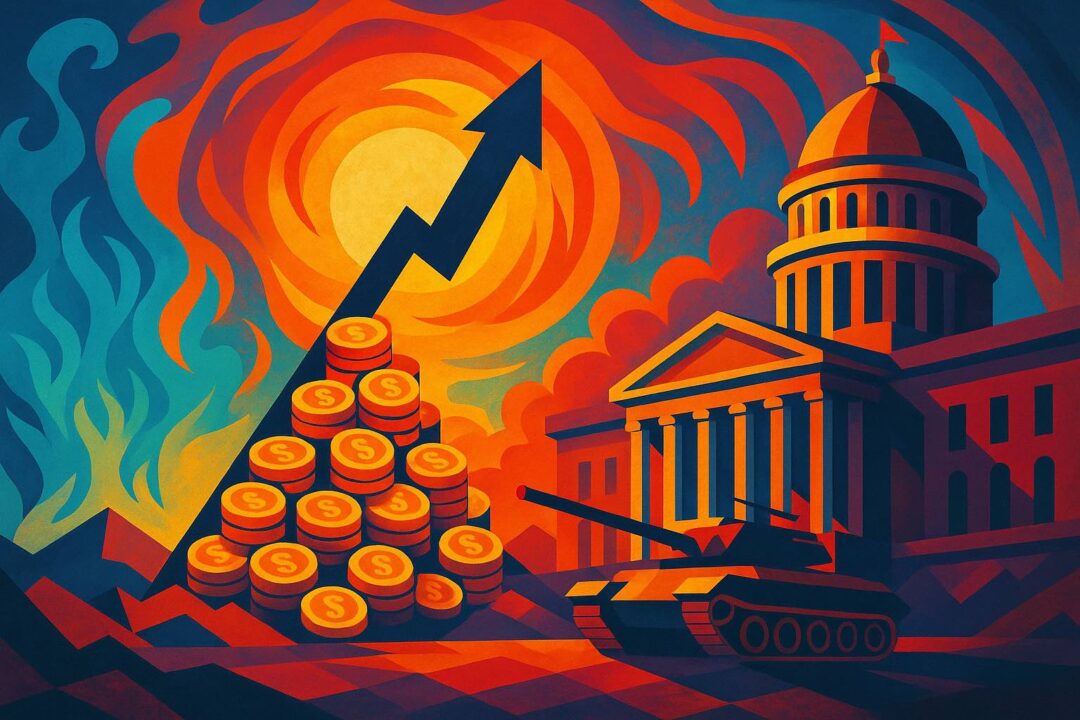
But over the past several decades, that cycle has been steadily eroded—and in recent years, the shift has accelerated. The power to create money has moved away from small and mid-sized banks making productive business loans, and toward highly centralized entities: megabanks and central banks. And the uses of new money have changed too. Instead of funding enterprise, technology, and growth, much of today’s new money is created to finance government debt, inflate financial markets, and support speculative instruments.
The result is a global economy awash with liquidity but starved of productivity. Debt piles up while genuine innovation and small business investment struggle to secure credit. Governments expand in size but not efficiency. Asset owners grow wealthier, while workers and entrepreneurs find the ladder of opportunity pulled further away.
In short: money creation has become detached from its productive roots, and in the process, money itself is losing meaning.
1. The Old Model: Decentralized, Productive Credit
For most of the 20th century, money creation followed a simple but powerful pattern.
- Commercial banks as creators. When a local bank extended a loan, it created a new deposit in the borrower’s account. That deposit was new money—credit brought to life.
- Loans tied to production. The vast majority of those loans financed factories, farms, small businesses, and trade. They were repaid out of the productive income generated by these activities.
- Decentralization. Tens of thousands of small and medium-sized banks across different regions ensured that credit was rooted in local knowledge and entrepreneurial risk-taking.
The effect was self-reinforcing: more loans meant more production, which meant more incomes and consumption, which created the conditions for more loans. Money creation was grounded in real activity.
This is what Richard Werner describes as “credit creation for GDP transactions.” It is not neutral—it shapes the structure of the economy. And for decades, it made money creation synonymous with progress.
2. The Shift: Centralized, Non-Productive Money Creation
But beginning in the late 20th century—and accelerating after the Global Financial Crisis of 2008—this engine of growth was dismantled.
- Decline of small banks. Regulatory burdens and consolidation wiped out relationship lenders who specialized in serving small businesses and communities. Their market share collapsed.
- Rise of megabanks. Lending concentrated in a few giants whose business models increasingly favored large corporates, mortgages, and speculative trading over productive SME loans.
- Financialization. The share of credit flowing into financial transactions, real estate speculation, and derivatives expanded rapidly.
- Central banks as dominant creators. QE programs injected trillions of new reserves into the financial system, but these reserves went overwhelmingly into government bonds and financial markets—not factories or startups.
The underlying pattern shifted: instead of money being created in response to productive business opportunities, it was created to sustain sovereign borrowing, inflate asset prices, and backstop the financial system.
This shift matters because it changes the purpose of money. Money no longer arrives because someone is building or inventing—it arrives because governments need to roll over debt or financial markets need liquidity.
3. The Explosion of Debt: When Money Becomes Its Own Purpose
Once money creation became disconnected from production, debt itself became the system’s anchor.
- Global debt has tripled since 2000, surpassing $300 trillion.
- Governments rely on endless borrowing, enabled by central banks buying their bonds.
- Corporations issue debt not only for investment, but often for stock buybacks and financial engineering.
- Households are trapped in mortgage and consumer credit cycles tied to inflating housing and asset prices.
Instead of debt being a temporary bridge to future productivity, it has become a permanent requirement for system survival. Every cycle of repayment depends on an even larger cycle of new borrowing.
This is why global growth feels increasingly sluggish even as liquidity floods markets: money circulates, but it no longer guarantees new production. It guarantees only more debt.
4. The Global Apex: How Institutions Gained Control
As money creation centralized, global financial institutions gained unprecedented influence.
- The BIS (Bank for International Settlements): By coordinating Basel rules, it effectively dictates how banks operate worldwide. Small banks struggle under compliance costs, while megabanks adapt and thrive, reinforcing concentration.
- The IMF and World Bank: Their programs enforce fiscal discipline and debt repayment structures, ensuring sovereign borrowers align with global financial norms—even at the cost of domestic development.
- The WEF: While not a regulator, it convenes the most powerful central bankers, financiers, and political leaders, shaping consensus around digital currencies, climate finance, and the architecture of global credit.
These institutions benefit from a system where money creation is funneled through sovereign and financial debt channels rather than through decentralized commercial lending. In such a system, governance is top-down, technocratic, and insulated from democratic accountability.
5. Money Detached: Losing Its Anchor in Value
The deepest consequence is that money has lost its grounding in production.
- When money creation financed industry, agriculture, and technology, every unit of currency corresponded to a claim on real goods and services.
- Now, with money creation financing debt rollover, asset inflation, and government consumption, each unit of currency corresponds more to paper claims on future paper claims.
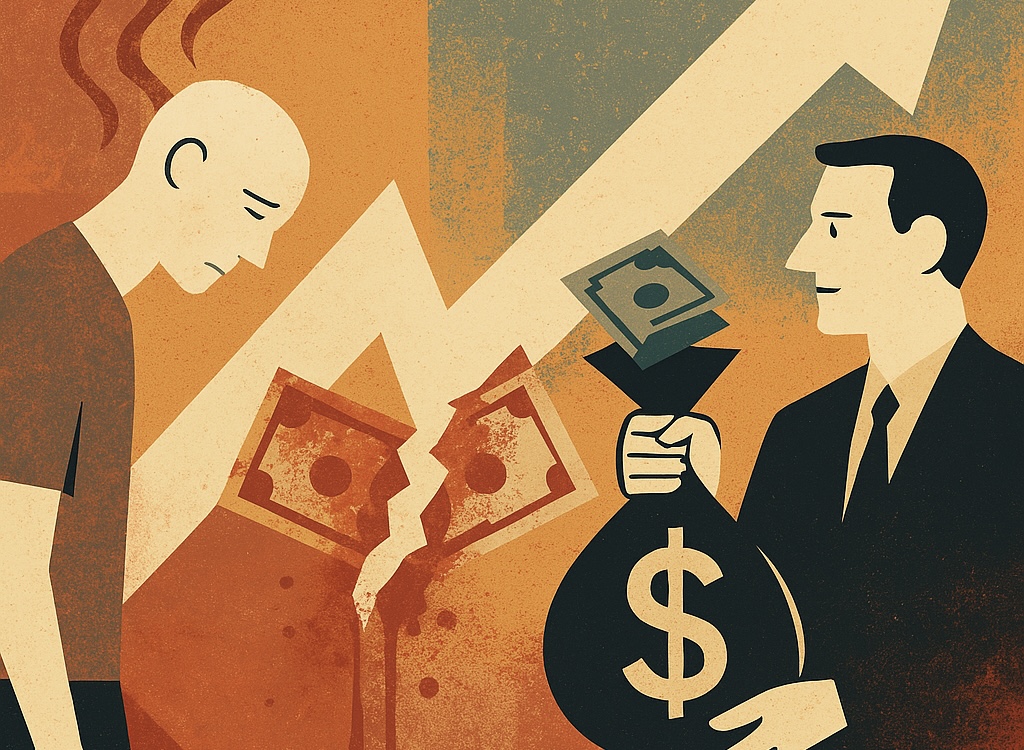
That’s why asset owners have seen extraordinary gains while wages stagnate. That’s why governments grow larger but not more effective. And that’s why the younger generation often feels locked out of wealth creation: the ladder has been pulled up, and money itself has been redefined.
Money no longer functions primarily as a medium of exchange for production. It functions as a tool for managing debt and sustaining financial markets.
6. The Next Step: Toward Total Centralization?
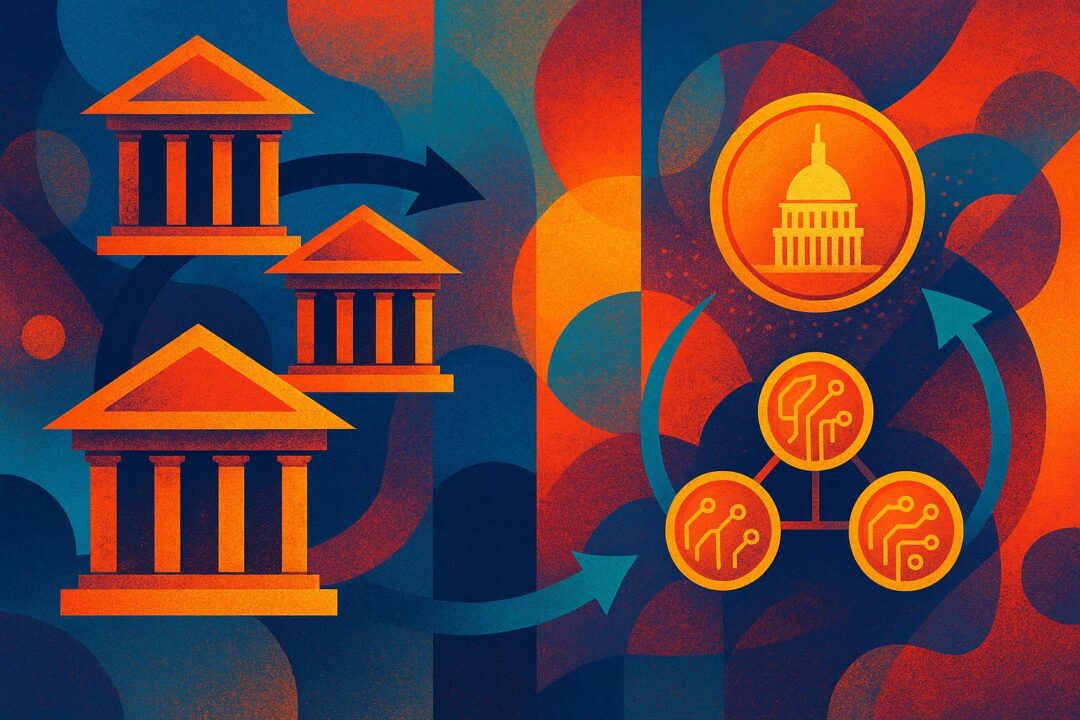
If current trends continue, the logical endgame is the introduction of Central Bank Digital Currencies (CBDCs).
On the surface, CBDCs are sold as modern, efficient, and inclusive—a digital upgrade to cash. But beneath the marketing lies something more profound: CBDCs represent the most centralized form of money humanity has ever seen.
- Direct control. By offering retail accounts at the central bank, governments could bypass commercial banks entirely, controlling the creation and distribution of money down to the individual level.
- Programmable money. CBDCs could be coded with conditions: money that expires after a certain date, money that can only be spent on approved items, or money that can be frozen at the click of a button.
- Surveillance. Every transaction could, in principle, be monitored in real time. Unlike cash, CBDCs eliminate anonymity.
This isn’t just a technical innovation—it is a dystopian leap. It would hand governments and central banks unprecedented power over the economic lives of citizens. In the context of the long trend toward centralized money creation, CBDCs are not neutral. They are the ultimate tool of financial control.
What began decades ago as a shift from productive business credit toward financial and sovereign debt would culminate in a system where money itself becomes a lever of direct social and political power.
7. Rules, Regulations, and the Strangling of Decentralization
Another force accelerating the shift toward centralization has been the rise of ever more complex rules and regulations. While often introduced with the stated aim of stability, transparency, or consumer protection, the effect has been to further concentrate financial power and weaken the parts of the economy that once drove genuine growth.
- Regulatory burden on small banks. Compliance with detailed Basel standards, capital requirements, and reporting frameworks imposes costs that small and mid-sized banks can scarcely absorb. Many have merged or disappeared, leaving the field to large global banks better equipped to navigate the rules.
- Barriers for small and medium businesses. The same regulatory environment that privileges large corporations often creates obstacles for SMEs seeking credit. Complex loan standards and documentation processes raise hurdles that relationship banking once smoothed over.
- Advantage for large finance and corporates. By design or by default, excessive regulation favors scale. Large financial institutions and multinational firms can absorb compliance costs and even lobby for frameworks that entrench their dominance, while smaller competitors are squeezed out.
- Public sector crowding-out. Governments, too, rely on regulatory frameworks that direct credit toward sovereign debt rather than toward the diverse needs of private enterprise. This leaves less room for public or private initiatives that directly expand GDP and welfare.
The irony is clear: rules meant to stabilize the system have instead tilted it toward centralization, bureaucracy, and concentration of power. They have inhibited the decentralized dynamism of small banks, small businesses, and community-level investment—the very engines of productivity and prosperity. In doing so, they have reinforced the long trend of money creation serving governments and large financial entities at the expense of the broader economy.
Conclusion: Reclaiming the Meaning of Money
In the space of a few decades, money creation has undergone a quiet revolution:
- Then: decentralized banks created money for business, industry, and innovation. Credit funded factories, technology, and real growth. Money meant opportunity.
- Now: central banks and megabanks create money for government debt, financial markets, and asset inflation. Credit sustains bureaucracy, speculation, and inequality. Money means debt.
This shift explains why global debt has ballooned, why governments keep expanding without becoming more effective, and why ordinary people feel left behind while financial elites thrive. It explains why wages stagnate while asset prices soar, and why the money in our accounts feels increasingly detached from the goods, services, and opportunities around us.
But the story is not just about economics—it is about power. As money creation centralizes, so too does control. Institutions like the BIS, IMF, and WEF now shape the frameworks through which money flows. Governments lean ever more heavily on central banks. And the prospect of CBDCs promises to merge money itself with political authority in ways never seen before.
If money is the lifeblood of society, then we are witnessing a transformation of its very nature: from a decentralized force for production and prosperity into a centralized instrument of debt and control.
The danger is not just inequality or stagnation—it is that money loses its meaning altogether. When money no longer reflects productive value, but only layers of debt and political power, it ceases to function as the foundation of trust in the economy.
Reclaiming the meaning of money requires more than technical fixes. It requires a fundamental rethinking of what money is for: not to sustain endless debt or inflate financial markets, but to enable enterprise, innovation, and shared prosperity. Only by redirecting credit creation back to productive purposes can money once again serve as a measure of real value—and as a force for freedom rather than control.
Bonus Section: Speculation on What Comes Next
What follows is not analysis but speculation. It sketches one possible future if the current trends in money creation and debt continue to accelerate.
One possible outcome of this long shift is a global deflationary bust. As debt loads keep rising faster than productive growth, the ability of households, businesses, and even governments to service obligations may begin to collapse under their own weight. Demand would weaken, investment would stall, and prices could fall despite abundant liquidity.
In such a scenario, governments and central banks would respond in the only way they know: by cutting rates and expanding balance sheets even further.
- Rates trending to zero. One by one, countries may push short-term interest rates toward zero in an attempt to relieve debt burdens and stimulate demand. Over time, this would also drag down longer-term rates, flattening yields globally.
- QE as the default tool. To stabilize sovereign debt and financial markets, central banks in major economies would ramp up quantitative easing. Bonds would be bought in ever greater quantities, injecting reserves into the system.
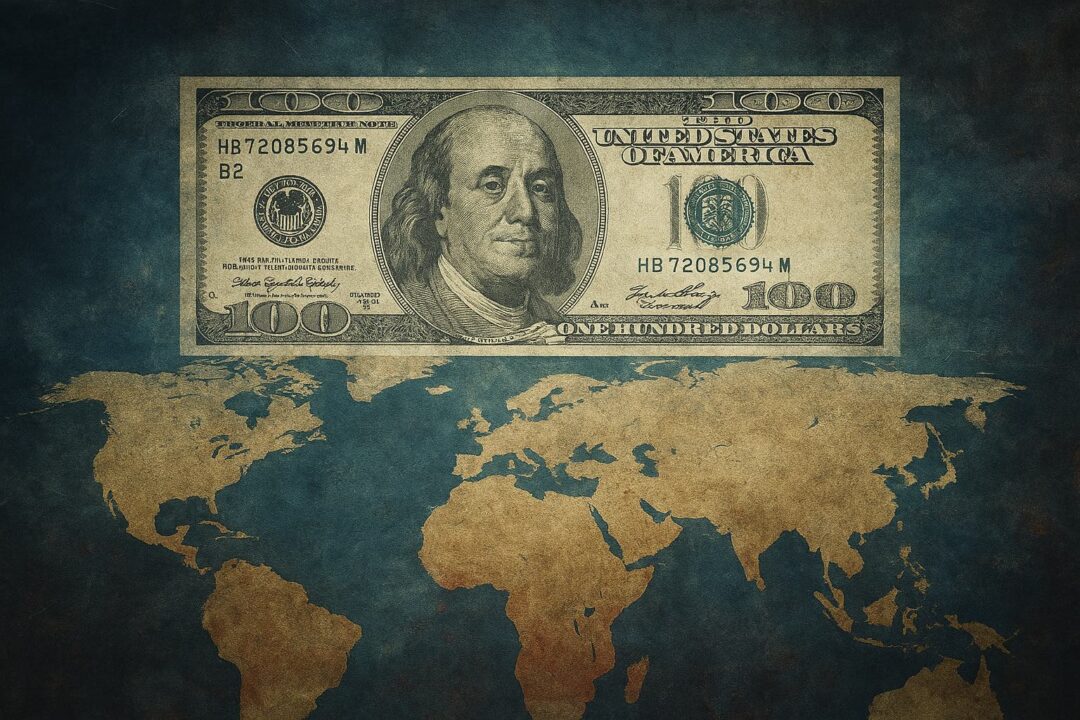
- The US exception. Most economies could not expand their balance sheets this way without destroying the value of their currency. But the United States, as issuer of the global reserve currency, has more leeway. The dollar’s role in global trade and finance gives the US scope to run massive QE programs while maintaining demand for its currency.
The implication is sobering: a world in which interest rates converge toward zero, QE becomes semi-permanent, and the United States stands apart as the only economy able to sustain large-scale monetary expansion without immediate currency collapse. Other major Western economies may follow, but with greater risks of devaluation and financial instability.
Whether this scenario plays out or not, it highlights the fragility of a system that has shifted money creation away from productive lending and toward sovereign and financial debt. Once debt itself becomes the anchor of money, it is difficult to imagine an exit that does not involve crisis or radical change.
But none of these measures—zero rates, perpetual QE, or currency privilege—address the underlying problem: money creation has been diverted from productive use into unproductive debt. As long as that remains true, these policies cannot offer a lasting solution. Sooner or later, some form of global reset or remaking of the monetary order will surely become inevitable.
Discover more from Brin Wilson...
Subscribe to get the latest posts sent to your email.